

Why turning Book Knowledge Into Results is So Rare
Most people read business books hoping for clarity, but a strange thing happens: inspiration spikes… and then nothing changes. Not because the books are bad, but because translating ideas into action is harder than anyone admits. Frameworks are everywhere. Instructions tailored to your real life? Rare. At its core, this article looks at what it actually takes to turn book knowledge into business results in a world overloaded with information.
Somewhere between the constant rush of digital noise and the endless stream of business advice circulating online, reading a full-length nonfiction book has quietly become an unusual habit. Many people intend to do it, of course, but the pull of short-form content is strong. It’s easier to watch a reel summarising a concept in ten seconds than to sit with the long, unhurried explanations found in a proper book.
Books offer frameworks, but they don’t offer instructions tailored to your specific circumstances.
Yet the entrepreneurs who still set time aside to read — really read — tend to discover something useful: the long view.

For readers who want a broader context on why practical skills matter more than ever in today’s shifting business environment, there’s a deeper examination here: Practical Business Skills: Why they Matter More Than Ever
A well-written business book often contains decades of lived experience, captured in stories that took years to unfold. Reading them isn’t just about absorbing information; it’s about borrowing someone else’s hindsight and using it to make better decisions.
But there’s a catch.
Very little changes simply because you’ve read something insightful.
Anyone who has ever highlighted a brilliant paragraph knows the feeling. You finish the book, feel inspired for a moment, and then everything quietly returns to normal. The business keeps moving. The same habits reappear. The insight fades until it becomes just another note buried in a notebook or digital folder.
This is the gap that matters.
The space between understanding an idea and doing anything with it.
In practice, applying book knowledge is harder than it looks. Real businesses are messy. They’re shaped by constraints, personalities, unpredictable timing, and markets that don’t follow the neat patterns authors use to explain concepts. What made sense in a case study doesn’t always survive contact with the real world.
For many entrepreneurs, the real work begins after the reading ends.
The 3-Step Method That Turns Book Knowledge Into Business Results
One way to approach this translation problem is to treat every idea as a small experiment instead of a ready-made solution. Books offer frameworks, but they don’t offer instructions tailored to your specific circumstances. That’s where interpretation, testing, and adjustment come in.
StreetMBA frames this process through what we call the E3 Loop, a simple way to turn reading into something practical:
Extract
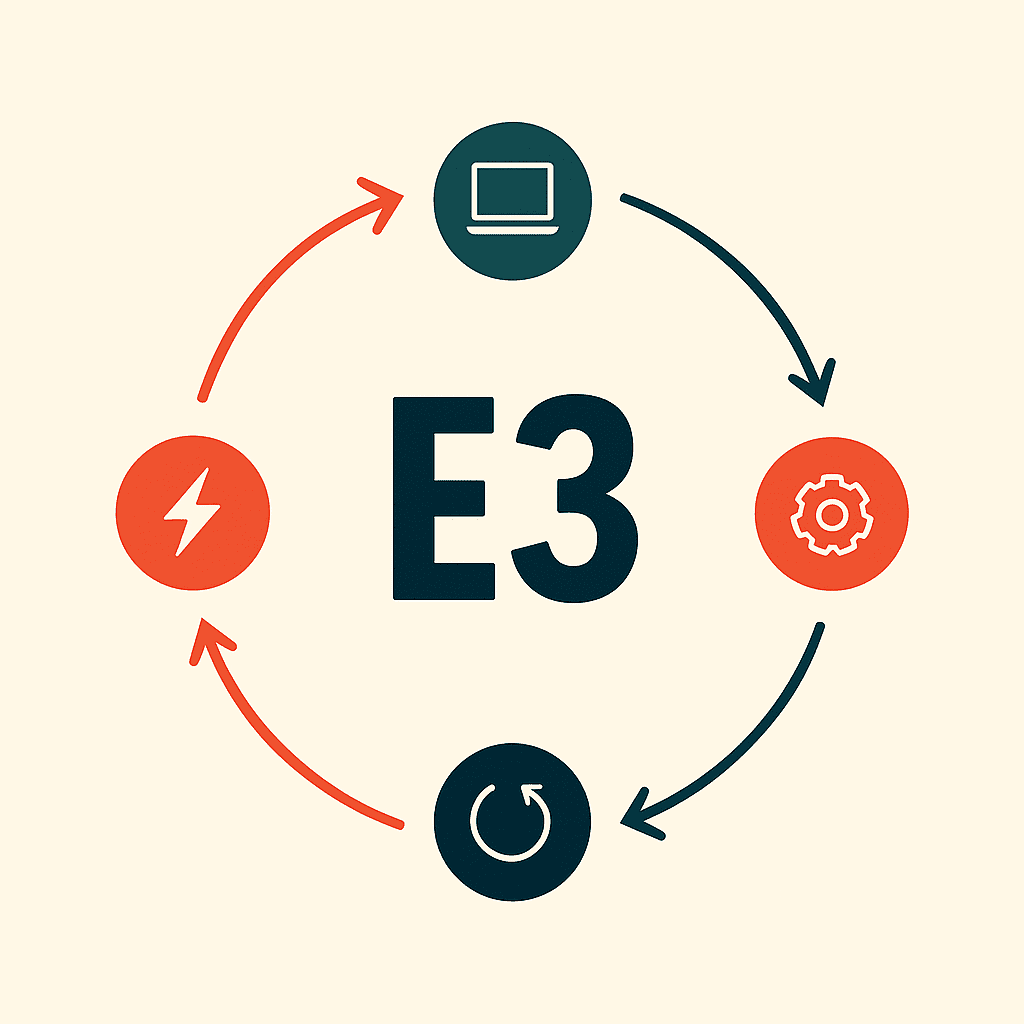
Pull out a single principle or technique worth trying. Just one. Not an entire chapter. Not a five-step formula. Most books contain a dozen potential ideas, but only a few are immediately relevant.
Execute
Try the idea in a limited, low-risk way. Instead of “implementing a strategy,” think of it like running a small trial. You want to see how it behaves inside your actual environment, with your team, your customers, and your constraints.
Evolve
Pay attention to what happens, then adjust the idea accordingly. This step is where the real learning takes place. Some concepts will fit surprisingly well. Others will need modification. A few may not work at all — and that’s fine. The value lies in the iteration.
Approached this way, reading becomes less about collecting knowledge and more about feeding your decision-making system with new material. You’re not trying to replicate what an author did; you’re exploring whether the underlying logic can improve something in your own operation.
What’s interesting is that entrepreneurs who consistently work this way tend to develop a kind of quiet advantage. They don’t necessarily read more books, but they get more out of the ones they do read. They build a personal library of ideas that have been tested against real conditions, rather than remembered only in theory.
It’s a slower process than consuming quick summaries online, but it’s steadier — and far more transferable. Over time, the habit of testing ideas creates a deeper understanding of what actually works for you, not just what worked for someone else.
This is the spirit behind StreetMBA.
The goal isn’t to overwhelm readers with information, but to help them bring ideas to life in a way that matches the unpredictability of real business.
You don’t need to absorb everything.
You just need to apply something — and keep adjusting until it matters.
More practical break-downs and applied frameworks will follow in this series. The goal is simple: to make the path from reading to real-world results clearer, quieter, and far easier to repeat. Stay tuned — the next step builds directly on this foundation.
So without wasting any further time… If you want to go deeper, the next step is getting clear on what skills actually matter. I break them down in the follow-up article: The 7 Core Business Skills Every Entrepreneur Must Master.
Leave a Reply